
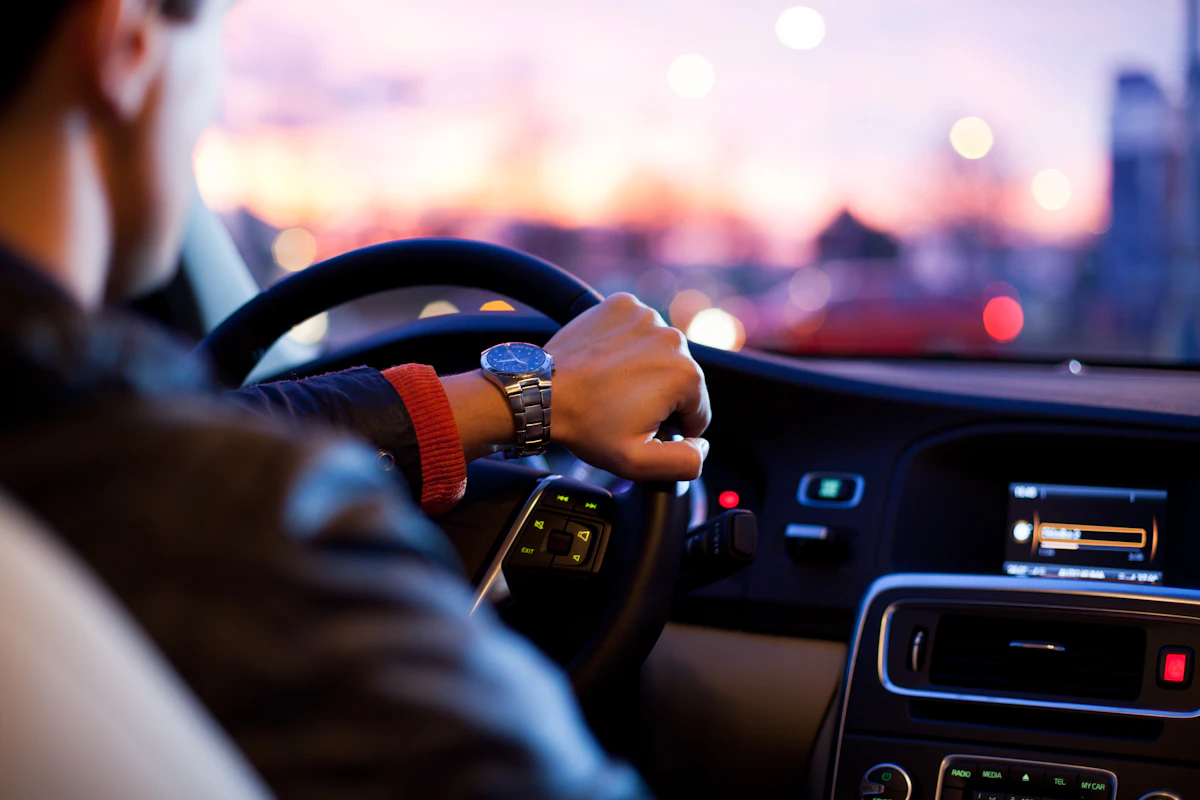
Your driver's license is in your wallet, but even thinking about getting behind the wheel makes your heart race; if you always leave the highway, bridges or heavy traffic to someone else, this article is for you. A fear of driving is more common than you might think, and it can be worked on in small, planned steps.
What is a fear of driving?
A fear of driving is an intense, disproportionate fear and avoidance of driving or of certain driving situations. In the medical literature it is sometimes called amaxophobia, and it is considered a "situational" type of specific phobia.
The fear is concentrated in different places for different people: some can't get behind the wheel at all, while others only struggle on highways, bridges, in tunnels, at night or in the rain.
Why do people develop a fear of driving?
A fear of driving usually develops for one or more of these reasons:
- An accident or near miss (it may have happened to you or someone close to you)
- Not driving for a long time: Confidence drops after years without driving once you have your license.
- Fear of panic attacks: The worry "What if I have a panic attack while driving?"
- Fear of losing control or making mistakes: Being afraid of endangering others, being honked at or being judged
- The avoidance cycle: The more you avoid, the more your skills and confidence decline, and the fear grows.
What are the symptoms of a fear of driving?
- Bodily: Racing heart, sweating, shaky hands, gripping the wheel very tightly, muscle tension
- Mental: "I'll crash", "I'll lose control", "Everyone will honk at me", "What if I break down?"
- Behavioral: Always asking someone else to drive, avoiding certain roads and times, choosing very long alternative routes
How do you overcome a fear of driving?
One of the most effective ways to overcome a fear of driving is to rank driving situations from easiest to hardest and progress by repeating each step until your anxiety decreases. This is called gradual exposure.
A sample driving ladder
| Step | Situation | Anxiety (0–100) |
|---|---|---|
| 1 | Sitting in the driver's seat of a parked car for 5 minutes | 15 |
| 2 | Starting the engine and adjusting the mirrors and seat | 20 |
| 3 | Driving slowly around an empty parking lot | 30 |
| 4 | A short drive around your neighborhood at a quiet time | 40 |
| 5 | Driving a familiar short route to the store | 50 |
| 6 | Driving on a moderately busy road | 60 |
| 7 | Driving one exit on a short stretch of highway | 75 |
| 8 | Driving in heavy traffic or over a bridge | 85 |
Repeat each step a few times and move on to the next once your anxiety clearly decreases. To build your own ladder, see our anxiety ladder guide.
Tips for practicing safely
- If you haven't driven in a long time, start with an instructor: Many driving schools offer refresher lessons for licensed drivers. Practicing in a dual-control car can build confidence quickly.
- Bring a calm passenger at first: Choose someone calm who won't criticize you. Over time, aim to drive alone.
- Plan your route ahead: Set up navigation before you leave; reducing uncertainty reduces anxiety.
- Gradually let go of safety behaviors: Always using the same route, staying only in the right lane or never turning on the radio is understandable at first; over time, loosen these habits.
What should you do if you panic while driving?
If your anxiety rises while driving, make sure you're safe first, then slow your body down:
- Reduce your speed, pull over somewhere safe and turn on your hazard lights.
- Lengthen your exhale: breathe in for 4 seconds, out for 6.
- Notice your hands on the wheel and your feet on the pedals and floor.
- Tell yourself: "This is a wave of anxiety. It rises and falls."
- Once your anxiety eases, continue your drive if possible; stopping right away can strengthen avoidance.
You can find more about panic attacks in our article what is a panic attack.
Important: If you take medication that can cause drowsiness (including some sedatives), talk to your doctor before driving. Don't practice driving when you're tired, have been drinking or are distracted.
Which thoughts make the fear bigger?
- "I'm definitely going to crash." → "Feeling anxious doesn't mean I'll crash. I'm driving slowly and carefully."
- "Everyone will honk at me and I'll be humiliated." → "A few honks may be annoying, but I can handle them; everyone was a beginner once."
- "If I panic on the highway, I can't escape." → "There's a shoulder and there are exits. I've been anxious before, and it passed."
When should you seek professional help?
If the fear started after an accident or traumatic event, if you have distressing memories, nightmares or strong startle reactions related to it, or if it clearly restricts your commute and daily life, it's a good idea to see a psychiatrist or clinical psychologist.
In short
- A fear of driving is common; it often starts with an accident, a long break from driving or a fear of panic.
- A gradual ladder from sitting in a parked car to heavy traffic, with regular repetition, is one of the most effective approaches.
- If you haven't driven in a long time, starting with an instructor and always putting safety first is important.
Sources
Frequently Asked Questions
What is the fear of driving called?
The fear of driving is sometimes called amaxophobia in the medical literature. It is an intense, disproportionate fear and avoidance of driving or of certain driving situations, and it is considered a situational type of specific phobia.
I have a license but I'm too scared to drive. What should I do?
This is very common. You can make a gradual plan that starts with sitting in a parked car and moves on to an empty parking lot, quiet streets and, over time, heavier traffic. If you haven't driven in a long time, refresher lessons with a driving instructor can build confidence quickly.
How do I get over my fear of highway driving?
Start by driving a short stretch at a quiet time, for example just one exit. As your anxiety decreases, gradually increase the distance and the traffic. Knowing where the shoulder and exits are also reduces uncertainty.
Is it normal to be afraid of driving after an accident?
Yes, being afraid to drive after an accident is a very understandable reaction. If the fear doesn't ease over time, or comes with distressing memories and nightmares about the accident, getting support from a mental health professional is recommended.
Fobim Yok is a self-help tool; it does not replace medical diagnosis or treatment. If you experience intense anxiety or panic, contact a mental health professional. In an emergency, call your local emergency number. Last updated: October 25, 2026.
You might also like
 Phobias
What Is Agoraphobia? Symptoms and Facing It Step by Step
Agoraphobia is an intense fear and avoidance of situations such as public transport, crowds, or open and enclosed spaces where you believe escape would be difficult or help unavailable if panic-like symptoms occurred. Gradual exposure and CBT techniques that aim to make peace with bodily sensations are commonly used to cope with agoraphobia.
 Phobias
Fear of the Dentist (Dental Anxiety): 8 Tips to Feel Calmer in the Chair
Fear of the dentist (dental anxiety or dentophobia) is intense anxiety about dental treatment, going to the dental office or sitting in the chair, and it can lead people to put off treatment. Telling your dentist about your fear, agreeing on a 'stop' signal, starting with short appointments and using breathing techniques can help you feel calmer in the chair.
 Phobias
Fear of Spiders (Arachnophobia): A Step-by-Step Plan from Photos to Reality
Arachnophobia is an intense, disproportionate fear of seeing, thinking about or looking at pictures of spiders, and it is one of the most common specific phobias. A gradual exposure plan that starts with the word and moves through photos and videos to a real spider is one of the most effective ways to reduce this fear.